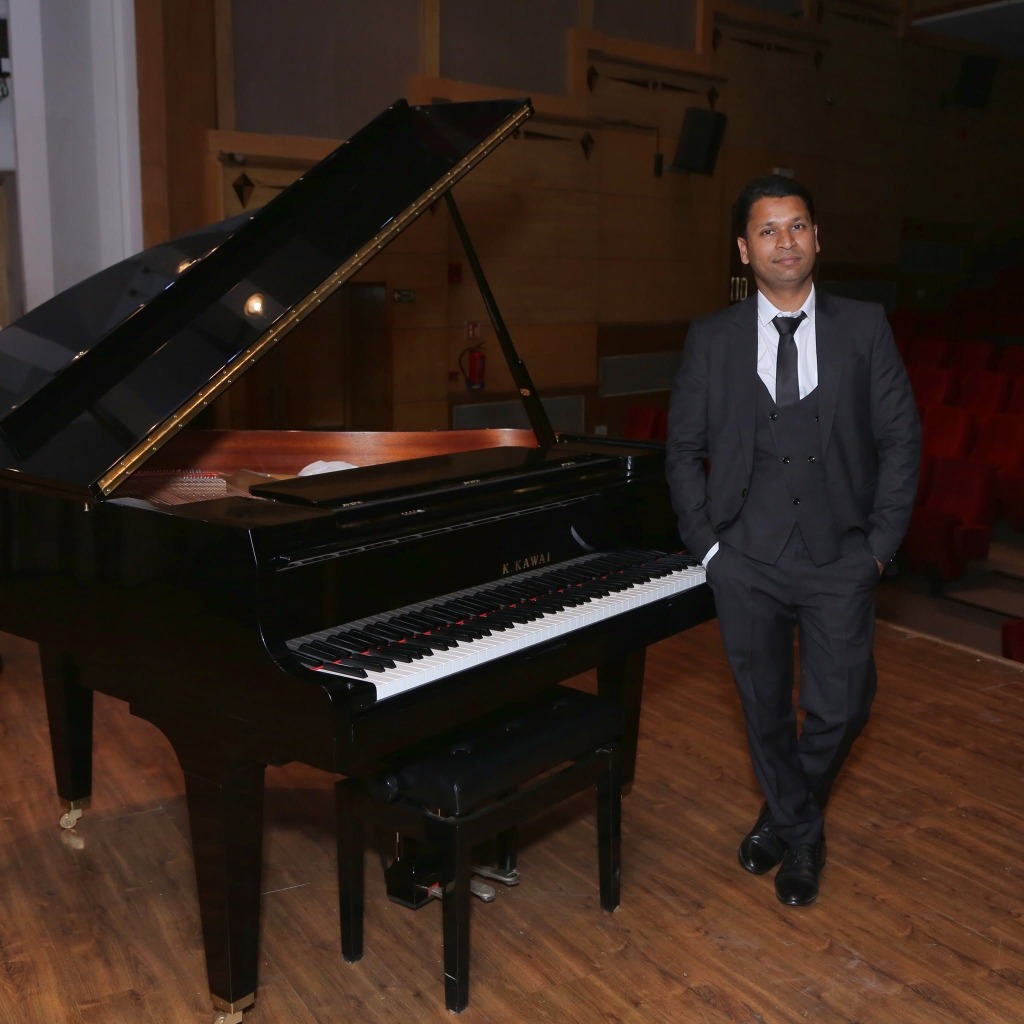
The Acoustic Imperative: Why Serious Pianists Invest in Real Wood and Steel
Moving Beyond Digital Emulation to Pure Mechanical Resonance
In an age dominated by high-end digital electronics, a fundamental truth remains unquestioned in the classical music world: no digital piano, regardless of price or sampling sophistication, can replace the acoustic instrument.
An acoustic piano is an engineering triumph. Over 10,000 individual moving parts—wooden keys, whippens, felt-covered hammers, damper felts, bridge pins, and a cast-iron plate supporting twenty tons of string tension—work together in seamless mechanical unity. When a pianist strikes an acoustic key, they do not trigger a pre-recorded computer sample through a speaker; they physically launch a hammer against tensioned steel wire, causing a solid spruce soundboard to vibrate and displace cubic meters of air.
For families across Delhi NCR preparing to invest between ₹2,50,000 and ₹20,00,000+ in an instrument, choosing the right piano is a major commitment. With twenty-five years of experience guiding students and consulting on instrument procurement, Syed Sajjad Rasul offers this definitive buying guide for Indian homes.
Leading Acoustic Brands in India: Yamaha vs. Kawai vs. Steinway
Analyzing Tonality, Action Mechanics, and Build Quality
Three legendary manufacturers dominate the fine acoustic piano landscape in India:
1. Yamaha Corporation (Japan): Yamaha is the world's most widely recognized piano manufacturer. Their instruments are celebrated for extraordinary manufacturing consistency, structural durability, and a signature bright, crystalline, and articulate tone. Yamaha’s action is precise and responsive, making it an exceptional choice for modern classical repertoire, technical scales, and versatile performance.
2. Kawai Musical Instruments (Japan): Kawai is Yamaha’s historic Japanese rival, known for its deep dedication to acoustic warmth. Kawai pianos produce a warmer, darker, more singing tone reminiscent of European instruments. Kawai’s revolutionary Millennium III Action, constructed using ABS-Carbon composite materials rather than wood, is exceptionally impervious to humidity and temperature fluctuations—a major advantage in Delhi’s climate.
3. Steinway & Sons / Boston / Essex (Germany / USA): Steinway & Sons represents the undisputed concert standard worldwide. For private homes with expansive budgets, a handcrafted Steinway baby grand (Model S, Model O) or its family brands—Boston (designed by Steinway, built by Kawai) and Essex (entry luxury)—deliver unmatched harmonic richness, touch sensitivity, and generational prestige.
Comprehensive Acoustic Piano Buying Matrix for Indian Residences
Comparing Models, Pricing, Dimensions, and Tonal Characteristics (2026)
This comparison illustrates the clear graduation from accessible student uprights to professional conservatory instruments. For most serious students in Delhi, the Yamaha U1 or Kawai K-300 represents the sweet spot of price, durability, and tone.
| Piano Model | Type / Height | Price Range (India) | Action & Material | Tonal Profile | Ideal Room Setting |
|---|---|---|---|---|---|
| Kawai ND-21 | Upright (121 cm) | ₹2,50,000 – ₹3,20,000 | Ultra-Responsive Action | Warm, mellow European tone | Apartments & study rooms |
| Yamaha JU109 | Upright (109 cm) | ₹2,80,000 – ₹3,50,000 | Yamaha Balanced Action | Bright, clear, articulate | Compact modern apartments |
| Yamaha U1 / U3 | Upright (121 / 131 cm) | ₹6,50,000 – ₹11,00,000 | Full-size Conservatory Action | Rich, powerful, resonant | Spacious living salons |
| Kawai K-300 / K-500 | Upright (122 / 130 cm) | ₹6,00,000 – ₹10,50,000 | Millennium III ABS-Carbon | Singing, warm, expressive | Private villas & salons |
| Yamaha GB1K | Baby Grand (151 cm) | ₹9,50,000 – ₹13,00,000 | Horizontal Grand Action | Dynamic, projecting, bright | Open-plan drawing rooms |
| Kawai GL-10 / GL-30 | Baby Grand (153 / 166 cm) | ₹10,50,000 – ₹16,00,000 | Millennium III Grand Action | Warm, lyrical, resonant | High-ceiling living rooms |
| Steinway Model S / O | Luxury Grand (155 / 180 cm) | ₹60,00,000 – ₹1,20,00,000+ | Handcrafted German Action | Unrivaled harmonic depth | Palatial private estates |
Delhi Climate Preservation: Defending Your Piano Against Humidity Swings
Protecting the Soundboard, Pinblock, and Action Felt
Delhi NCR presents one of the most hostile climatic environments in the world for fine acoustic pianos. The annual weather cycle swings violently between two extremes: • The Monsoon Extreme (July–September): Relative humidity routinely surges above 80%–90%. Wooden soundboards absorb moisture and swell, pushing strings upward and causing pitches to go sharp. Action felts absorb moisture, causing sluggish, sticking keys. • The Dry Heat & Winter Extreme (April–June & Dec–Jan): Air conditioning and dry summer heat drive humidity below 20%. The soundboard dries out and shrinks, risking catastrophic wood cracking, while wooden tuning pinblocks loosen, causing the piano to lose pitch stability.
The Essential Climate Preservation Protocol: 1. The Dampp-Chaser Piano Life Saver System: An internal micro-climate system installed directly inside the piano that automatically balances humidity, keeping it at a constant 45%. 2. Room Placement Rules: Never place an acoustic piano in direct sunlight, directly below an air conditioner vent, or flush against an exterior damp wall. Maintain at least six inches of breathing room from interior walls. 3. Bi-Annual Professional Tuning: Every acoustic piano in Delhi must be tuned at least twice a year—ideally right after the monsoon settles (October) and after winter ends (March).
New vs. Pre-Owned Pianos: Navigating the Second-Hand Market in Delhi
Avoiding the Pitfalls of Grey-Market Imports
Many families consider purchasing a used Yamaha or European upright to save costs. While extraordinary bargains exist, the pre-owned market in Delhi is filled with risks: • Grey-Market Imports: Many second-hand pianos sold in Delhi are 40-to-50-year-old retired institutional pianos imported from Japan or Europe. The wood was never seasoned for the tropical climate of India, leading to cracked bridges and loose tuning pins. • The Action Regulation Check: Ensure that key bushings are not worn and hammer felts have not been over-filed by amateur technicians.
Syed Sajjad Rasul personally inspects used instruments for students, ensuring that families invest only in structurally sound instruments with decades of musical life ahead.
Consultation & Instrument Procurement Assistance
Schedule an Expert Piano Assessment with Master Sajjad
Purchasing an acoustic piano is an investment in your family’s cultural heritage. Before finalizing any purchase from dealers or private sellers across Delhi NCR, consult with an independent master pedagogue.
Syed Sajjad Rasul provides professional advisory services, evaluating your domestic acoustic environment, recommending the ideal piano model for your child's developmental stage, and conducting on-site technical inspections.
Connect via WhatsApp or telephone to arrange a consultation.
Detailed Model Dissection: Yamaha U1 vs. Kawai K-300
The Two Titans of the Professional Upright Piano Market in India
For most serious classical students in Delhi NCR, the ultimate purchasing decision narrows down to two world-renowned Japanese instruments: the Yamaha U1 (121 cm) and the Kawai K-300 (122 cm). Both represent the professional conservatory benchmark, yet they offer distinctly different musical personalities:
- ▸Yamaha U1:
- ▸- *Tonality:* Bright, crystalline, articulate, and punchy. Exceptional clarity in fast scalic passagework and contrapuntal Baroque music.
- ▸- *Action:* Fast, responsive, slightly firmer key resistance that builds strong finger knuckle arches.
- ▸- *Acoustic Fit:* Superb for modern apartments and rooms with plush carpeting or fabric furnishings that naturally absorb excess high-frequency brightness.
- ▸Kawai K-300:
- ▸- *Tonality:* Warmer, richer, and more mellow with a singing European-style cantabile treble.
- ▸- *Action:* Features Kawai's Millennium III Action with ABS-Carbon composite components. The action is light, exceptionally smooth, and highly resistant to humidity-induced swelling.
- ▸- *Acoustic Fit:* Ideal for hard-surfaced salons with marble flooring, where Yamaha's brightness might sound overly percussive.
The 10-Point Pre-Owned Piano Inspection Checklist
How Syed Sajjad Rasul Protects Families from Costly Second-Hand Mistakes
Before purchasing any used acoustic piano in Delhi NCR, Master Sajjad conducts an exhaustive 10-point technical examination: 1. Soundboard Integrity: Inspecting the solid spruce soundboard from behind for hairline structural cracks or separation from the ribs. 2. Bridge Pin Tightness: Checking that the wooden bridge has not split along the bridge pins, which causes dead, buzzing notes. 3. Pinblock Torque (Tuning Stability): Testing tuning pin torque with a specialized tuning wrench; loose pins mean the piano will never stay in tune. 4. Cast-Iron Plate Inspection: Verifying that the perimeter iron frame has zero stress fractures. 5. Action Regulation & Hammer Wear: Evaluating hammer felt grooving; ensuring hammers have sufficient felt remaining and are properly aligned with strings. 6. Damper Efficiency: Confirming that felt dampers seat cleanly against strings, silencing notes instantly upon key release. 7. Keybed Bushings: Ensuring wooden keys have minimal lateral wobble while maintaining smooth vertical travel. 8. Trapwork and Pedaling: Testing sustain, una corda (soft), and practice/celeste pedals for smooth mechanical leverage. 9. String Rust & Corrosion: Inspecting high-tensile steel music wire and copper-wound bass strings for rust caused by Delhi monsoon humidity. 10. Serial Number Verification: Checking manufacturer archives to confirm the true age and manufacturing origin of the instrument.
Room Acoustics and Piano Maintenance Schedule
Preserving Your Acoustic Investment in Delhi NCR
To ensure your piano maintains its value and sublime tone: • Bi-Annual Tuning Protocol: Schedule tunings in October (post-monsoon) and March (post-winter). • Dampp-Chaser System: Keep the system plugged in 24/7 to maintain constant 45% relative humidity inside the piano cabinet. • Action Regulation: Every three to five years, have a certified technician regulate key height, hammer blow distance, and let-off to maintain factory-fresh touch sensitivity.
Dampp-Chaser Installation and Soundboard Resonance Engineering in India
The Complete Technical Guide to Climate-Proofing Fine Pianos
For families investing ₹5,00,000 to ₹25,00,000 in a fine Yamaha, Kawai, or Steinway piano, Delhi NCR's violent humidity swings represent an existential threat to the instrument's structural integrity. During the monsoon, humidity routinely exceeds 85%, while winter dry heat drives it down to 18%.
The Dampp-Chaser Piano Life Saver System is the globally recognized gold standard for acoustic piano preservation: • Dehumidifier Rods: When humidity rises above 45%, internal heating rods gently warm the air beneath the soundboard, driving out excess moisture and preventing wood swelling, sticking action keys, and rusted strings. • Humidifier Tanks: When dry winter air causes humidity to plummet, an automated water tank and vapor pad release controlled moisture, preventing the solid spruce soundboard from shrinking and cracking. • Humidistat Controller: A precision sensor maintains internal piano relative humidity at an optimal 45% year-round, stabilizing tuning pitch and extending the lifespan of the instrument by decades.
Master Sajjad personally assists families in coordinating professional installation of these systems with certified technicians.
The Ultimate 12-Point Pre-Owned Piano Inspection Checklist
Avoiding the Pitfalls of Grey-Market Imports in Delhi
Before purchasing any used acoustic piano in Delhi NCR, Master Sajjad conducts an exhaustive 12-point technical examination: 1. Soundboard Integrity: Inspecting the spruce soundboard for hairline cracks or rib separation. 2. Bridge Pin Tightness: Checking that the wooden bridge has not split along the bridge pins. 3. Pinblock Torque: Testing tuning pin torque with a specialized tuning wrench; loose pins mean the piano will never hold tune. 4. Cast-Iron Plate Inspection: Verifying zero stress fractures along the perimeter frame. 5. Action Regulation & Hammer Wear: Evaluating hammer felt grooving and strike alignment. 6. Damper Efficiency: Confirming that felt dampers seat cleanly, silencing notes instantly upon key release. 7. Keybed Bushings: Ensuring minimal lateral wobble and smooth vertical travel. 8. Trapwork and Pedaling: Testing sustain, una corda, and practice pedals for smooth mechanical leverage. 9. String Rust & Corrosion: Inspecting high-tensile steel music wire and copper bass strings for corrosion. 10. Serial Number Verification: Checking manufacturer archives to confirm the true age and manufacturing origin. 11. Action Rail Stability: Inspecting center pins and action brackets for humidity-induced corrosion. 12. Acoustic Scale Alignment: Playing chromatic intervals across the entire keybed to evaluate tonal uniformity.