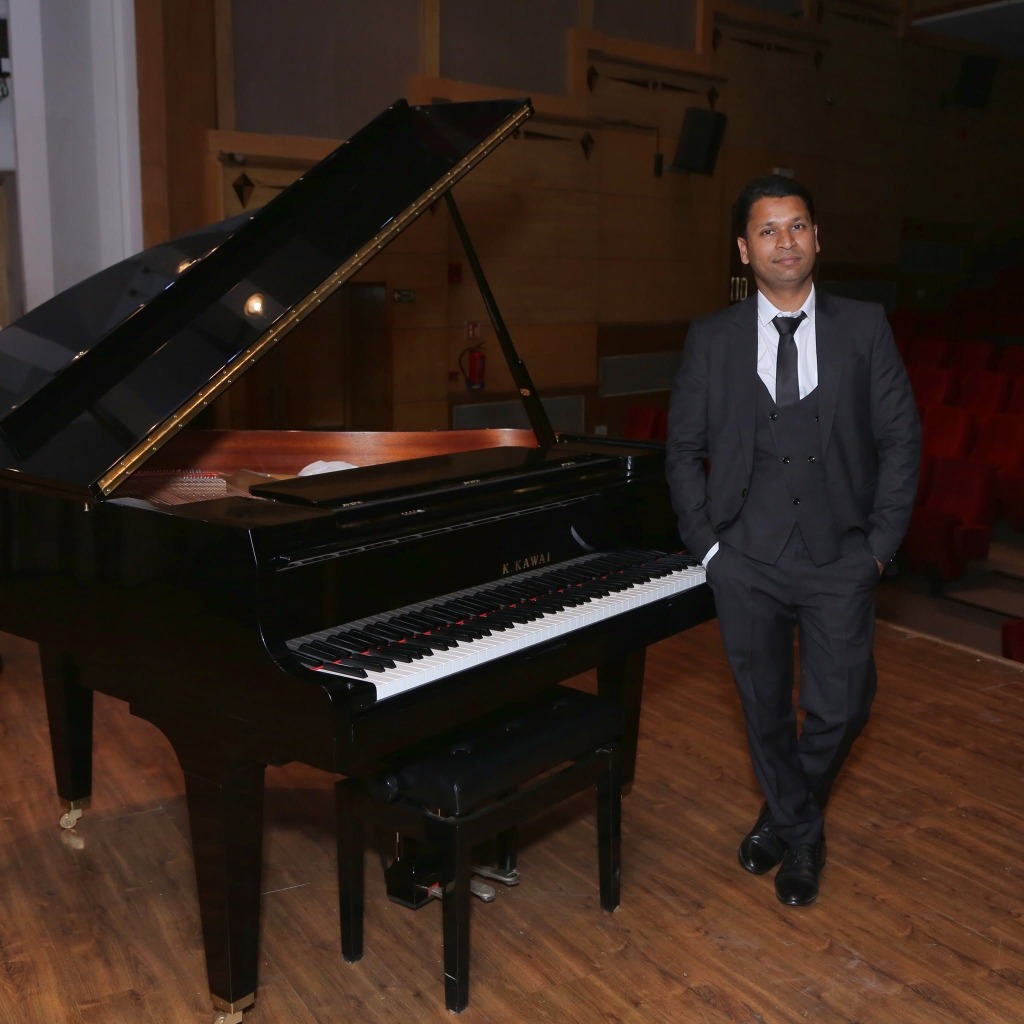
The Holistic Admissions Paradigm: Beyond the Perfect SAT and 4.0 GPA
Why Global Elite Universities Seek the Musical 'Extracurricular Spike'
In contemporary international university admissions—particularly across the Ivy League (Harvard, Yale, Princeton, Columbia, Penn, Brown, Dartmouth, Cornell), Stanford, MIT, and UK Russell Group titans like Oxford and Cambridge—academic perfection is merely the baseline. Every year, tens of thousands of applicants submit flawless Grade 12 board marks, perfect 1550+ SAT scores, and dozens of Advanced Placement credentials. Yet the vast majority are rejected.
Admissions officers at the world’s most selective institutions have long discarded the concept of the 'well-rounded' applicant. A student who participates casually in five different school clubs, dabbles in community service, and plays recreational tennis does not stand out. What elite admissions committees actively seek is the 'pointed' applicant—a student who has demonstrated an unmistakable, multi-year spike of authentic excellence in a challenging domain.
Western classical piano, certified to Grade 8 Distinction by Trinity College London, represents one of the most respected extracurricular spikes in global education. It cannot be bought, outsourced, or crammed in a summer boot camp. It is unambiguous proof of sustained grit, intellectual fortitude, and extraordinary fine-motor coordination developed over nearly a decade.
Deconstructing the Extracurricular Spike: What Admissions Officers See
The Psychological and Cognitive Signals of Classical Mastery
When an admissions committee member at Stanford or Harvard reviews an application containing a Trinity College London Grade 8 Distinction achieved under a recognized master pedagogue like Syed Sajjad Rasul, they recognize five critical character markers:
- ▸Unflinching Long-Term Dedication (Delayed Gratification):
- ▸Progressing from Initial Grade through to Grade 8 requires an estimated 1,500 to 2,500 hours of deliberate solitary practice. In an era where adolescents are accustomed to instant algorithmic gratification, a teenager who has practiced scales, arpeggios, and polyphonic counterpoint year after year exhibits rare maturity and psychological grit.
- ▸High-Stress Executive Poise:
- ▸Performing complex, memorized classical repertoire before an international examiner or a live audience of hundreds at prestigious venues like the India International Centre (IIC) demonstrates emotional self-regulation and executive composure under intense scrutiny.
- ▸Advanced Bilateral Neuroplasticity:
- ▸Playing complex polyphony requires real-time simultaneous processing across visual, auditory, kinesthetic, and emotional neural pathways. Studies demonstrate that trained classical pianists possess superior bilateral hemispheric connectivity, translating into enhanced spatial reasoning, mathematical aptitude, and analytical problem-solving abilities.
UCAS Tariff Points: Direct Academic Credit in the United Kingdom
Quantifiable Admissions Credit for UK University Aspirants
For families targeting British universities through UCAS (Universities and Colleges Admissions Service), a Trinity College London examination is not merely an extracurricular bullet point—it carries official academic credit.
The UK Department for Education and Ofqual regulate Trinity qualifications at Level 3 of the Regulated Qualifications Framework (RQF). Grades 6, 7, and 8 award official UCAS tariff points based on the mark achieved:
Official UCAS Tariff Points Allocation for Trinity Piano
Quantitative Credit Matrix for British University Admissions
As the table clearly indicates, achieving a Distinction in Grade 8 awards thirty full UCAS tariff points. In competitive UK admissions, where university offers hinge on strict tariff point thresholds, these thirty points can be the decisive factor in securing an unconditional or conditional offer at prestigious institutions.
| Trinity Piano Exam Grade | Pass (60–74 Marks) | Merit (75–86 Marks) | Distinction (87–100 Marks) |
|---|---|---|---|
| Grade 6 Practical | 6 UCAS Points | 10 UCAS Points | 12 UCAS Points |
| Grade 7 Practical | 10 UCAS Points | 14 UCAS Points | 16 UCAS Points |
| Grade 8 Practical | 18 UCAS Points | 24 UCAS Points | 30 UCAS Points |
| Associate Diploma (ATCL) | Level 4 Higher Education Credit | Conservatory-Standard Equivalent | Prestigious Professional Credential |
Crafting the Arts Supplement and the Common App Profile
Maximizing Strategic Impact on US University Applications
On the US Common Application, serious pianists have the opportunity to submit an official Arts Supplement / Music Portfolio via platforms like Slideroom. This submission is reviewed not by general admissions officers, but by faculty members of the university’s Department of Music.
Under the guidance of Syed Sajjad Rasul, students prepare conservatory-caliber submissions: • Curated Repertoire Selection: Selecting a balanced, historically contrasting program: a Baroque contrapuntal work (J.S. Bach Prelude & Fugue), a classical sonata movement (Beethoven, Mozart), a Romantic masterpiece (Chopin, Liszt, Brahms), and an expressive 20th-century or contemporary work (Debussy, Ravel, Bartók). • High-Fidelity Audio-Visual Recording: Recording on an acoustic grand piano with professional multi-angle camera framing that clearly displays finger articulation, wrist flexibility, and pedaling. • Compelling Artistic Statement: Articulating how classical music informs the student’s worldview, intellectual curiosity, and broader academic pursuits. • Master Pedagogue Recommendation Letter: A substantive, authoritative letter from Syed Sajjad Rasul highlighting the student's work ethic, technical evolution, and distinction-level achievements.
Case Studies: From Sajjad Rasul Studio to Global Campuses
Proven Pathways of Success
Over twenty-five years of teaching excellence, Syed Sajjad Rasul’s studio has mentored students who have successfully matriculated into the world’s most prestigious institutions, including Ivy League universities, top British Russell Group schools, and leading medical and law programs worldwide.
These alumni consistently report that the discipline forged through piano exams and public recitals became their greatest asset in navigating rigorous university coursework. The ability to sit down and dissect an intimidating problem, break it into constituent components, and practice with methodical patience is precisely the skill set that university professors reward.
Planning Your Child's Examination and Admissions Timeline
Strategic Extracurricular Roadmap
To ensure your child’s musical achievements align seamlessly with university application deadlines, early strategic planning is essential: • Ages 7–10 (Grades 1–3): Establishing foundational hand mechanics, sight-reading reflexes, and acoustic touch. • Ages 11–13 (Grades 4–6): Expanding stylistic vocabulary, developing octave speed, and scoring high distinctions. • Ages 14–16 (Grades 7–8): Achieving Grade 8 Distinction and beginning preparation for the ATCL Performance Diploma, perfectly timed for high school resumes and college applications.
Consult with Master Sajjad to design a tailored musical and academic roadmap for your child.
The Slideroom Arts Supplement Architecture: Crafting the Audition Portfolio
How to Produce a Conservatory-Caliber Video Submission for US Admissions
When applying to elite American universities via the Common Application, the Arts Supplement submitted through Slideroom is evaluated directly by university music faculty members. These professors review hundreds of student submissions; a poorly recorded, casual smartphone video will be dismissed within thirty seconds.
Under Syed Sajjad Rasul's direction, students prepare professional-grade arts portfolios: • Balanced Repertoire Programming (10–15 Minutes Total): A contrapuntal Baroque work (e.g., J.S. Bach Prelude & Fugue in C minor), an expansive Classical movement (e.g., Beethoven Sonata Op. 10 No. 1), a passionate Romantic masterwork (e.g., Chopin Ballade No. 1 or Nocturne Op. 48 No. 1), and a modern 20th-century work (e.g., Debussy Arabesque or Prokofiev Prelude). • Professional Multi-Angle Framing: Utilizing professional multi-camera setups that showcase the student's profile, posture, finger independence, and pedaling on an acoustic grand piano. • Studio Recommendation Letter: Syed Sajjad Rasul crafts detailed, individualized recommendation letters that detail the student's multi-year work ethic, technical hurdles overcome, and distinction-level achievements.
The Common App Activity Section: Articulating Classical Piano Excellence
Transforming 150 Characters into an Irresistible Admissions Signal
On the Common Application, students have only 150 characters to describe each activity. Most students waste this space with generic phrases like 'Played piano for 8 years, took exams, practiced daily.'
Master Sajjad trains students to craft compelling, high-impact descriptions: • Weak Description: 'Learned piano, cleared exams with good marks, performed in annual school concerts.' • Elite Strategic Description: 'Concert Pianist: Trinity College London Grade 8 Distinction (Top 1% score). Soloist at India International Centre (IIC). 10 yrs deliberate practice; mentored 12 junior peers in aural literacy.'
This formulation immediately conveys quantifiable achievement, exceptional distinction, leadership, and public performance mastery.
Admissions Case Studies: Ivy League & Oxbridge Placements
How Classical Distinction Opened Doors at World-Class Campuses
Alumni of Syed Sajjad Rasul's studio have gained admission to Harvard, Columbia, Oxford, Cambridge, and London School of Economics. In admissions debriefs, admissions officers specifically noted the students' Grade 8 Piano Distinctions and IIC recital leadership as decisive proof of character, intellectual stamina, and emotional maturity.
Quantitative Analysis of the Common App Arts Supplement Evaluation Matrix
How Ivy League Music Faculties Score Non-Music Major Submissions
A widespread misconception among college applicants is that only students intending to major in music should submit an Arts Supplement. In reality, admissions committees at Yale, Princeton, Columbia, and Harvard eagerly welcome Arts Supplements from prospective economics, computer science, pre-med, and engineering majors.
When a music faculty member reviews an applicant's Slideroom portfolio, they evaluate three objective dimensions: 1. Technical Command (Scale of 1 to 5): Evaluates posture, finger independence, tempo consistency, dynamic control, and pedaling sophistication. A student who performs a complex Bach Prelude and Fugue with clear voice independence automatically earns top marks. 2. Musicality & Stylistic Authority (Scale of 1 to 5): Assesses whether the candidate understands the historical aesthetic—playing Mozart with crisp classical symmetry, or Chopin with authentic, unexaggerated rubato. 3. Potential Contribution to Campus Ensembles (Scale of 1 to 5): Considers whether the student would be an asset to university chamber music programs, symphony orchestras, or solo recital series.
A composite score of 1 or 2 (on a 1-to-5 scale where 1 is the highest) from the Department of Music is placed directly into the student's central admissions file, providing a decisive 'tip' during committee deliberations.
The Harvard & Oxbridge Interview: Speaking the Language of Artistry
How Classical Piano Training Commands the Alumni Interview
During the evaluative interview for Harvard, Stanford, Oxford, or Cambridge, admissions interviewers frequently ask: 'Tell me about something you do that isn't for a grade, and what it has taught you about yourself.'
Students trained by Syed Sajjad Rasul do not offer superficial platitudes. They speak with genuine passion and analytical sophistication: • Describing the intellectual journey of deciphering the polyphony of J.S. Bach, comparing counterpoint to algorithmic logic or architectural design. • Explaining how preparing for a recital at the India International Centre taught them to regulate fear and perform under pressure. • Articulating how eight years of daily classical practice taught them that true excellence is built through patient, deliberate iteration—the very definition of academic research.