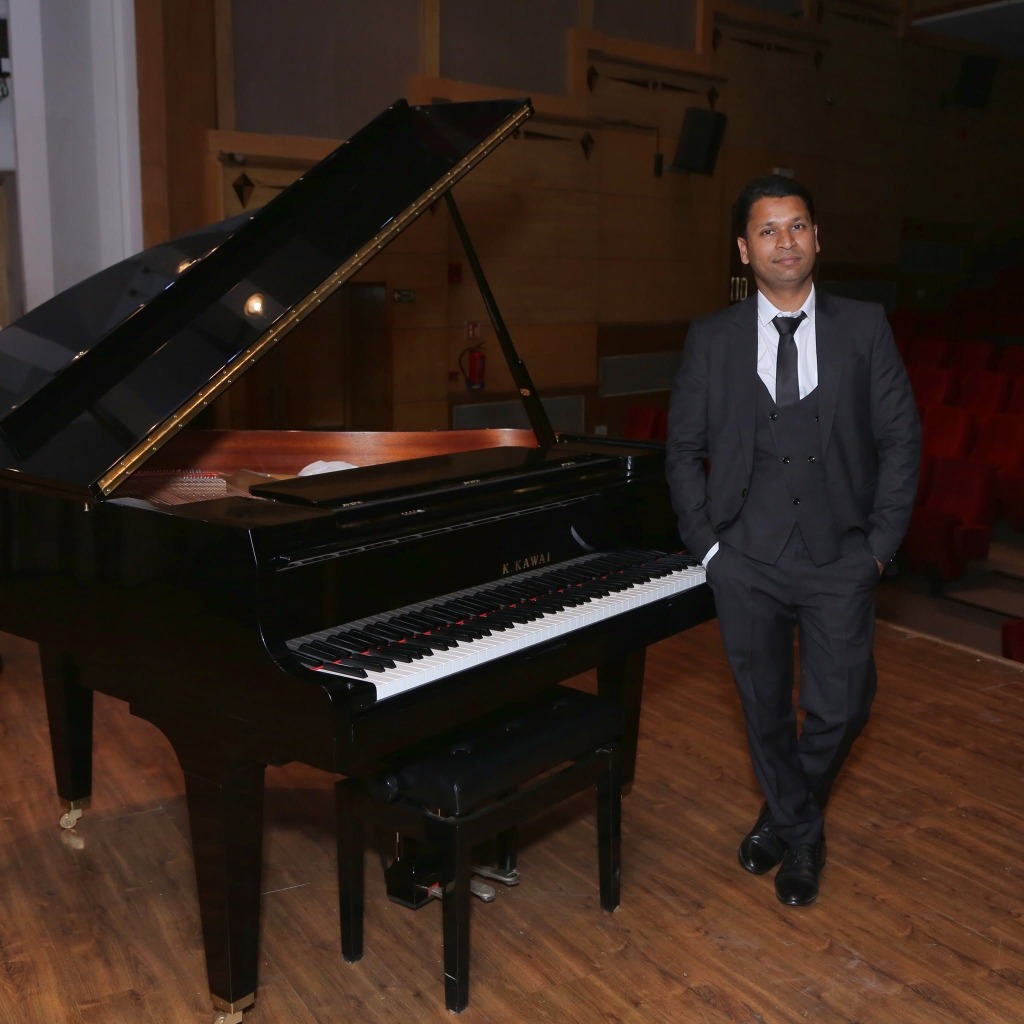
Understanding the Piano Tuition Market in Delhi NCR
Navigating Pricing Tiers from Neighborhood Hobby Centers to Master Mentors
When families in Delhi NCR—from South Delhi’s enclaves to Gurugram’s luxury condominiums—inquire about piano tuition, they encounter a bewildering range of pricing. Monthly fees can range from ₹2,500 at a local music academy to ₹25,000+ per month for bespoke in-home private conservatory mentorship.
This vast price disparity often creates confusion. Why would one instructor charge ₹800 an hour while a master pedagogue commands ₹4,000 to ₹6,000 per session?
The answer lies in understanding that Western classical piano is not a commodity. Unlike purchasing a consumer good where mass production creates uniformity, music education is an intimate apprenticeship. The pedagogy your child receives directly alters their physical neurology, hand kinematics, aesthetic sensitivity, and academic trajectory.
This guide provides a comprehensive, transparent breakdown of the piano education pricing tiers across Delhi NCR in 2026, helping discerning parents assess the real relationship between cost, pedagogy, and results.
The Three Primary Tiers of Piano Tuition in Delhi
An Honest Breakdown of Costs, Formats, and Expected Outcomes
The private music market in Delhi NCR divides into three distinct pedagogical tiers:
Tier 1: Commercial Music Academies & Mall Hobby Centers (₹2,500 to ₹5,000 / Month) • Structure: Group classes of four to eight students, typically meeting once or twice per week for 45 to 60 minutes. • Equipment: Inexpensive 61-key unweighted digital keyboards or entry-level electronic pianos with headphone splitters. • Instructors: Young college students, part-time hobbyists, or freelance musicians with basic grade certificates. • Outcome: Basic note recognition and simple single-hand melodies. Students rarely develop true acoustic touch, dynamic control, or deep sight-reading skills. Turnover is exceptionally high.
Tier 2: Mid-Tier Freelance Neighborhood Tutors (₹1,000 to ₹1,800 / Hour) • Structure: Individual lessons conducted at the teacher’s home or student’s residence. • Equipment: Mixed; some use digital pianos, others own entry-level uprights. • Instructors: Self-taught musicians or individuals who have completed intermediate grades (Grade 4–6). • Outcome: Satisfactory for casual recreational playing. However, tutors often lack the rigorous diagnostic eye needed to prepare students for Grade 8 distinctions or international conservatory standards.
Tier 3: Master Conservatory Mentorship — Syed Sajjad Rasul Studio (₹3,000 to ₹6,000+ / Session) • Structure: Strict 1-on-1 bespoke in-home or private studio mentorship. • Equipment: Acoustic grand or fine upright piano; rigorous physical and acoustic calibration. • Pedigree: Syed Sajjad Rasul: 25+ years teaching excellence, former institutional faculty at YMCA New Delhi, 7,000+ students mentored. • Outcome: Unbroken 100% Trinity College London Distinction pass record (Initial to Grade 8), annual recitals at the India International Centre (IIC), and Ivy League / UCAS admissions leverage.
Comprehensive Delhi Piano Tuition Fee Benchmark Matrix (2026)
Comparative Economic & Pedagogical Analysis
When evaluated on effective teacher attention and outcome certainty, the apparent 'savings' of commercial academies quickly disappear.
| Pricing & Value Metric | Tier 1: Commercial Academies | Tier 2: Freelance Neighborhood Tutors | Tier 3: Syed Sajjad Rasul Master Mentorship |
|---|---|---|---|
| Monthly Fee Range | ₹2,500 – ₹5,000 | ₹5,000 – ₹9,000 | ₹15,000 – ₹30,000+ (depending on frequency) |
| Effective Hourly Rate | ₹400 – ₹800 / student | ₹1,000 – ₹1,800 / hour | ₹3,000 – ₹6,000+ / session |
| Lesson Format | Group (4–8 students) | 1-on-1 private | 1-on-1 bespoke conservatory mentorship |
| Direct Teacher Time | 8–12 mins per student | 60 mins individual | 60 mins intense micro-kinetic coaching |
| Pedagogical Experience | 1–3 years (transient staff) | 3–7 years (variable background) | 25+ years (former YMCA faculty, 7,000+ alumni) |
| Instrument Standard | 61-key unweighted keyboard | Entry digital piano | Acoustic upright / grand piano calibration |
| Trinity Exam Track Record | Unpublished; variable passes | Inconsistent passes and merits | 100% distinction pass rate guaranteed |
| Concert Stage Debut | Internal center gathering | None or small home recital | Annual black-tie recital at India International Centre (IIC) |
The Hidden Costs of 'Inexpensive' Piano Lessons
Why Cheap Instruction is the Most Expensive Mistake a Parent Can Make
In music education, poor early instruction imposes heavy cognitive and financial penalties:
- ▸The Cost of Remedial Unlearning:
- ▸When a student spends two years at a cheap hobby center, they inevitably develop bad habits: collapsed wrists, hyper-extended finger joints, flat thumbs, and reliance on finger numbers rather than reading sheet music. When they eventually transition to a serious teacher, it takes twelve to eighteen months of frustrating remedial work just to unlearn these neuromuscular flaws.
- ▸Lost Developmental Windows:
- ▸The optimal window for building fine-motor neural pathways and absolute/relative pitch is between ages six and fourteen. Wasting these critical years on low-caliber instruction permanently handicaps a child’s ultimate musical ceiling.
- ▸Demotivation and Abandonment:
- ▸Students taught by uninspired tutors become bored and frustrated because they sound clumsy on the instrument. When lessons lack aesthetic depth, children inevitably quit, convincing themselves that they 'lack musical talent' when in fact they simply lacked master mentorship.
The Return on Investment: Extracurricular and Cognitive Dividends
Evaluating Piano Mentorship as a Generational Asset
For forward-thinking families, investing in master piano mentorship delivers dividends that far outstrip the financial outlay: • Extracurricular Admissions Currency: A Trinity Grade 8 Distinction awards 30 UCAS points and provides an irreplaceable spike on Ivy League and Oxbridge application essays. • Neuro-Cognitive Enhancement: The bilateral coordination required to play polyphonic classical music enhances spatial-temporal reasoning, mathematical fluency, and executive concentration. • Lifelong Cultural Capital: The ability to sit down at any piano—whether at an international hotel in Geneva, a university common room in Oxford, or a private salon in South Delhi—and perform with poise and expressive tone is an invaluable mark of sophistication that endures for life.
Transparent Consultation & Enrollment
Inquire for Private Studio Audition Rates
Tuition fees for Syed Sajjad Rasul’s private in-home and studio sessions are determined by lesson frequency, travel logistics (across South Delhi, Central Delhi, or Gurugram), and examination tier.
To receive a detailed fee schedule and arrange an initial diagnostic studio audition for your child, please connect directly via WhatsApp or phone. Master Sajjad conducts all initial assessments personally to ensure pedagogical alignment.
The Compounding Economic Equation: The Real Cost of Cheap Lessons
A Multi-Year Financial and Developmental Analysis
When evaluating piano tuition costs, parents frequently look only at the monthly invoice, failing to calculate the compounding cost per unit of progress.
Consider two real-world scenarios over a three-year period: • Scenario A: The Commercial Hobby Academy (₹3,500/month = ₹1,26,000 over 3 years) The student attends group classes once a week. After three years, they have learned several casual melodies, cannot read complex sheet music fluently, have developed collapsed wrist posture, and have failed to clear even Grade 2 with distinction. The child becomes demotivated and quits. Result: ₹1,26,000 spent, zero tangible credentials gained, and years of critical developmental time lost. • Scenario B: Syed Sajjad Rasul Master Mentorship (Conservatory Investment) The student receives focused, 1-on-1 private mentorship. After three years, the student has achieved Trinity Grade 3 and Grade 5 Distinctions, performed twice on stage at the India International Centre (IIC), reads music with complete fluency, and possesses flawless hand posture. Result: A permanent cognitive asset, recognized international academic credentials, and an unshakeable foundation for Grade 8 and college admissions.
Transparent Studio Policies and Long-Term Engagement
Clear Terms for Discerning Families
Master Sajjad maintains transparent, professional studio policies: • Dedicated Weekly Time Reservation: Each private in-home or studio slot represents a dedicated, recurring reservation of Master Sajjad's calendar. • Instrument Maintenance Advisory: Complimentary ongoing guidance on instrument tuning, climate control, and room acoustic optimization. • Recital and Masterclass Inclusion: Enrolled students gain priority access to annual IIC recital stages, internal studio masterclasses, and specialized exam preparation intensives.
Long-Term Value: A Generational Cultural Asset
Why World-Class Music Education Compounds Over a Lifetime
Unlike consumer electronics or fast-depreciating luxury purchases, conservatory piano training is an intellectual and cultural asset that never depreciates. It equips your child with executive presence, artistic depth, and neuro-cognitive stamina that will distinguish them across university campuses, corporate boardrooms, and international cultural circles for decades to come.
The 5-Year Financial Projection: Grade Initial to Grade 8 ROI
Evaluating the Compounding Return of World-Class Music Education
When parents analyze the investment required for five to eight years of conservatory mentorship with Syed Sajjad Rasul, it is illuminating to compare the cost against other high-end educational commitments: • International School Tuition: Delhi NCR premier international schools charge ₹8,00,000 to ₹15,00,000 annually. • Overseas Summer Camps & SAT Tutors: Families routinely spend ₹5,00,000 to ₹10,00,000 on standardized test prep and short overseas summer programs. • Conservatory Piano Mentorship: An annual investment of ₹2,00,000 to ₹3,50,000 with Master Sajjad yields an internationally accredited, lifelong credential (Trinity Grade 8 Distinction), 30 UCAS tariff points, an extraordinary college application spike, and an enduring artistic sanctuary.
Evaluated over a lifetime, master piano mentorship represents one of the highest-yield investments in human capital a family can make.
Cost vs. Quality: The Risk of the Rotating Freelancer
Why Cheap Home Tutors Waste Precious Developmental Years
Many families attempt to save money by hiring low-cost freelance home tutors who charge ₹800 to ₹1,200 per hour. However, these tutors rarely have institutional faculty backgrounds, lack a proven track record of international distinctions, and frequently cancel or reschedule lessons due to other gigs.
The result is inconsistent progress, lack of technical accountability, and eventual frustration. When a student transitions from a low-cost freelancer to Master Sajjad, months must be spent unlearning postural flaws and rebuilt hand arches from scratch. Investing in master mentorship from day one eliminates this costly detour.