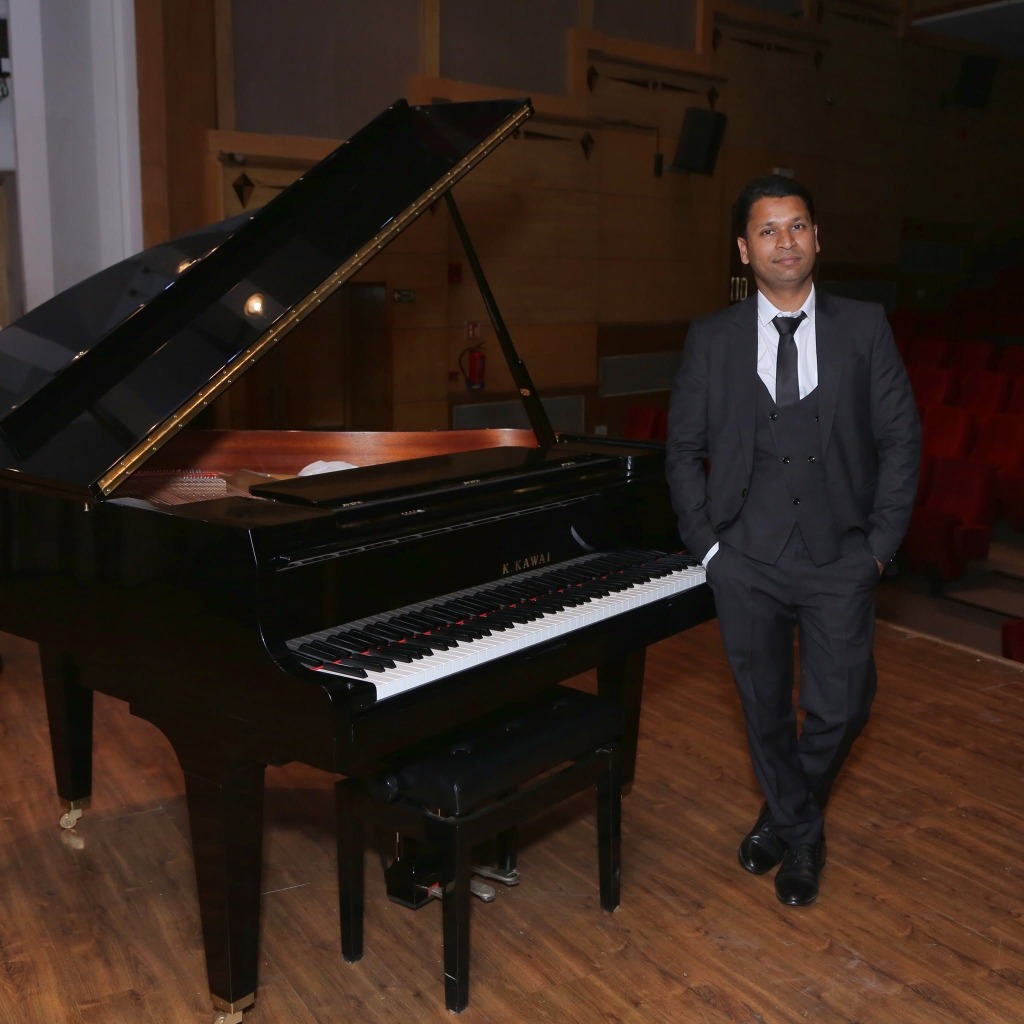
The Great Music Education Dilemma in Delhi NCR
Choosing Between Commercial Convenience and True Artistic Mastery
Across Delhi NCR, parents seeking music education for their children face a common dilemma: Should they enroll their child in a modern, slickly branded commercial music academy located in a nearby shopping mall, or should they seek out a distinguished private master tutor for bespoke one-on-one home mentorship?
On the surface, commercial academies appear attractive. They offer shiny reception areas, colorful marketing brochures, and promises of 'fun, fast learning.' However, beneath the polished corporate branding lies an economic model designed for volume and franchise profitability rather than artistic depth.
Western classical piano is, by its very nature, an intimate craft. It cannot be learned on an assembly line. For centuries, every celebrated pianist—from Beethoven and Liszt to Rachmaninoff and Argerich—was forged through the timeless tradition of master apprenticeship: one master, one student, one instrument, and relentless dedication to perfection.
This guide pulls back the curtain on the commercial music academy industry and explains why discerning families consistently choose private 1-on-1 mentorship with Syed Sajjad Rasul.
The Commercial Music Academy Business Model Exposed
Why Group Classrooms Inevitably Compromise Musical Development
To understand why students plateau at commercial music academies, one must examine their underlying economics:
- ▸The Math of Divided Attention:
- ▸A typical academy class enrolls four to eight students for a sixty-minute session. In that hour, the instructor must divide their attention among all students. In reality, each child receives only seven to ten minutes of direct instruction. During the remaining fifty minutes, the child plays with headphones on an electronic keyboard, repeating errors that go completely unnoticed.
- ▸The Rotating Instructor Trap:
- ▸Commercial music chains operate on thin margins and rely on underpaid, young freelance tutors or college students. As a result, staff turnover is notoriously high. It is common for a child to experience three or four different teachers in a single calendar year, each resetting the curriculum and confusing the student’s technical development.
- ▸The Plastic Keyboard Compromise:
- ▸Due to space and budget constraints, academies rarely provide acoustic pianos for every student. Instead, children sit before lightweight 61-key plastic keyboards with spring mechanisms. Playing on these instruments requires no finger strength, no wrist cushioning, and zero pedal nuance. When the child eventually attempts to play an acoustic piano, their hands buckle, and their tone is thin and brittle.
Direct Structural Comparison: Commercial Music Academy vs. Private Master Mentorship
An Uncompromising Breakdown
As the matrix shows, the two models pursue fundamentally different goals: commercial academies focus on volume retention, while private mentorship focuses on mastery.
| Educational Dimension | Commercial Music Academy | Syed Sajjad Rasul Private Mentorship |
|---|---|---|
| Instructional Ratio | 1 Teacher to 4–8 Students | Strictly 1 Teacher to 1 Student |
| Lesson Environment | Crowded commercial strip mall or office floor | Serene private home salon or dedicated studio |
| Instrument Standard | 61-key unweighted electronic keyboards | Student's private 88-key acoustic upright or grand |
| Instructor Stability | Frequent teacher turnover every 3–6 months | 25+ years unbroken pedagogical leadership |
| Pedagogical Focus | Rote memorization and casual pop melodies | Classical technique, deep sight-reading, and ear training |
| Touch & Posture Calibration | Intermittent and superficial checks | Relentless micro-kinetic scrutiny of every finger strike |
| Trinity Exam Distinction Rate | Unpublished; highly variable pass rates | Flawless 100% exam distinction record |
| Stage Presentation | Informal internal studio recitals | Prestigious recitals at India International Centre (IIC) |
The 1-on-1 Master Mentorship Advantage
Why Every Millisecond of Focused Attention Compounds Into Excellence
In private mentorship with Syed Sajjad Rasul, the educational paradigm is completely transformed:
- ▸Immediate Kinetic Intervention:
- ▸Master Sajjad observes the student from multiple angles—evaluating bench height, elbow clearance, wrist flexibility, and the curvature of individual finger joints. If a knuckle collapses on an F-sharp, it is addressed immediately before the error enters the muscle memory.
- ▸Acoustic Sound Production:
- ▸Playing an acoustic piano requires understanding physical resonance. Under 1-on-1 guidance, the student learns to listen to the decay of the note through the room’s air, discovering how arm weight creates a warm, singing tone that can fill a hall.
- ▸Customized Pedagogical Pacing:
- ▸Every student's brain processes musical notation at a unique rate. A brilliant student is not held back by slower peers, nor is a struggling student left behind. The repertoire, technical exercises, and aural drills are customized to the student's exact learning curve.
Auditorium Stage Poise: The Crucial Missing Element in Academies
Preparing for Real-World Musical Leadership
Commercial academies rarely possess the cultural prestige or resources to host formal recitals in premier concert halls. Their 'annual concerts' are typically held in cafeteria auditoriums or school gymnasiums on electric keyboards.
By contrast, Syed Sajjad Rasul’s studio hosts annual recitals at prestigious venues like the India International Centre (IIC). Students perform in formal attire on a concert acoustic grand piano before an audience of ambassadors, cultural leaders, and families. This authentic concert experience builds poise, resilience, and executive presence that serves students throughout their lives.
Requesting a Diagnostic In-Home Audition
Take the First Step Toward Authentic Mastery
If you want your child to experience the transformative power of authentic Western classical music education, we invite you to bypass the compromises of commercial academies.
Connect directly with master pedagogue Syed Sajjad Rasul via WhatsApp or telephone to arrange an initial in-home diagnostic audition across South Delhi, Central Delhi, or Gurugram. Discover the difference that 25+ years of dedicated conservatory mentorship makes.
The Psychology of Mass Commercial Academies: Why They Retain, Not Excel
The Franchise Dilemma of Group Music Education
Commercial music school franchises operate on business metrics common to gym memberships: sign up as many students as possible, keep operating costs minimal, and rely on students not making high demands on instructor expertise.
Because these centers must cater to the lowest common denominator, their curriculum is intentionally simplified: • They replace classical sheet music with simplified letter-name tabs or color-coded keyboard stickers. • They avoid technical scales and arpeggios because casual students find them challenging, depriving the student of finger velocity and agility. • They promote superficial 'recitals' where every student plays a twenty-second jingle, creating a false sense of progress while obscuring the absence of foundational technique.
In private conservatory mentorship with Syed Sajjad Rasul, the standard is unapologetically high. Excellence is not compromised for commercial convenience. Students are treated as serious aspiring artists from their very first lesson.
Acoustic Ear Feedback: The Critical Flaw of Headphone-Based Learning
Why Real Acoustic Resonance is Essential for Ear Development
At commercial academies, students spend up to 80% of their lesson time wearing inexpensive plastic headphones plugged into digital keyboards. While this keeps the classroom quiet, it severely damages the student's acoustic development: • Loss of Dynamic Awareness: Digital headphones compress dynamic range. A student has no idea whether they are playing with a delicate pianissimo or a brutal fortissimo because the master volume slider normalizes the sound. • Absence of Acoustic Feedback: A real piano soundboard vibrates the physical air of the room, sending acoustic vibrations through the floorboards and through the pianist's fingertips. This physical feedback is what trains the inner ear to regulate tone color. • Pedal Blindness: The subtle mechanical damping of an acoustic piano cannot be replicated through cheap headphone digital switches. Students develop 'muddy pedaling' that sounds disastrous the moment they perform on an acoustic instrument.
The Master-Apprentice Tradition: An Unbroken 25-Year Heritage
Individualized Mentorship That Shapes the Whole Person
For centuries, the master-apprentice model has been the only proven method for cultivating virtuosity. Under Syed Sajjad Rasul's personal guidance, mentorship extends beyond notes and rhythm to include character development, stage poise, intellectual curiosity, and aesthetic refinement—qualities that no commercial group class can ever provide.
Neurological Mapping: How Master 1-on-1 Feedback Accelerates Motor Myelination
The Neuroscience of Deliberate Practice Under Expert Supervision
In cognitive neuroscience, the acquisition of complex motor skills—such as playing rapid polyphony on the piano—relies on the process of myelination. Myelin is the insulating sheath that wraps around nerve fibers, increasing the speed and precision of electrical impulses. The more a specific neural circuit is fired, the thicker the myelin sheath becomes, turning conscious effort into effortless muscle memory.
However, myelin does not know good technique from bad technique. If a child practices with collapsed wrists and tense forearms in a crowded academy classroom, the brain dutifully wraps myelin around those faulty neural circuits, permanently calcifying bad habits.
In 1-on-1 mentorship with Syed Sajjad Rasul: • Every micro-movement is scrutinized in real time. If a finger collapses or a wrist locks, Master Sajjad intervenes instantly, preventing incorrect neural pathways from firing. • The student practices with 100% anatomical accuracy from the first repetition, building pristine myelin pathways that produce effortless speed and crystalline tone in a fraction of the time required by group learning.
Acoustic Ear Training vs. Headphone Isolation: Developing Tonal Sensitivity
Why Real Acoustic Resonance is Essential for Ear Development
At commercial music academies, students spend up to 80% of their lesson time wearing inexpensive plastic headphones plugged into digital keyboards. While this keeps the classroom quiet, it severely damages the student's acoustic development: • Loss of Dynamic Awareness: Digital headphones compress dynamic range. A student has no idea whether they are playing with a delicate pianissimo or a brutal fortissimo because the master volume slider normalizes the sound. • Absence of Acoustic Feedback: A real piano soundboard vibrates the physical air of the room, sending acoustic vibrations through the floorboards and through the pianist's fingertips. This physical feedback is what trains the inner ear to regulate tone color. • Pedal Blindness: The subtle mechanical damping of an acoustic piano cannot be replicated through cheap headphone digital switches. Students develop 'muddy pedaling' that sounds disastrous the moment they perform on an acoustic instrument.