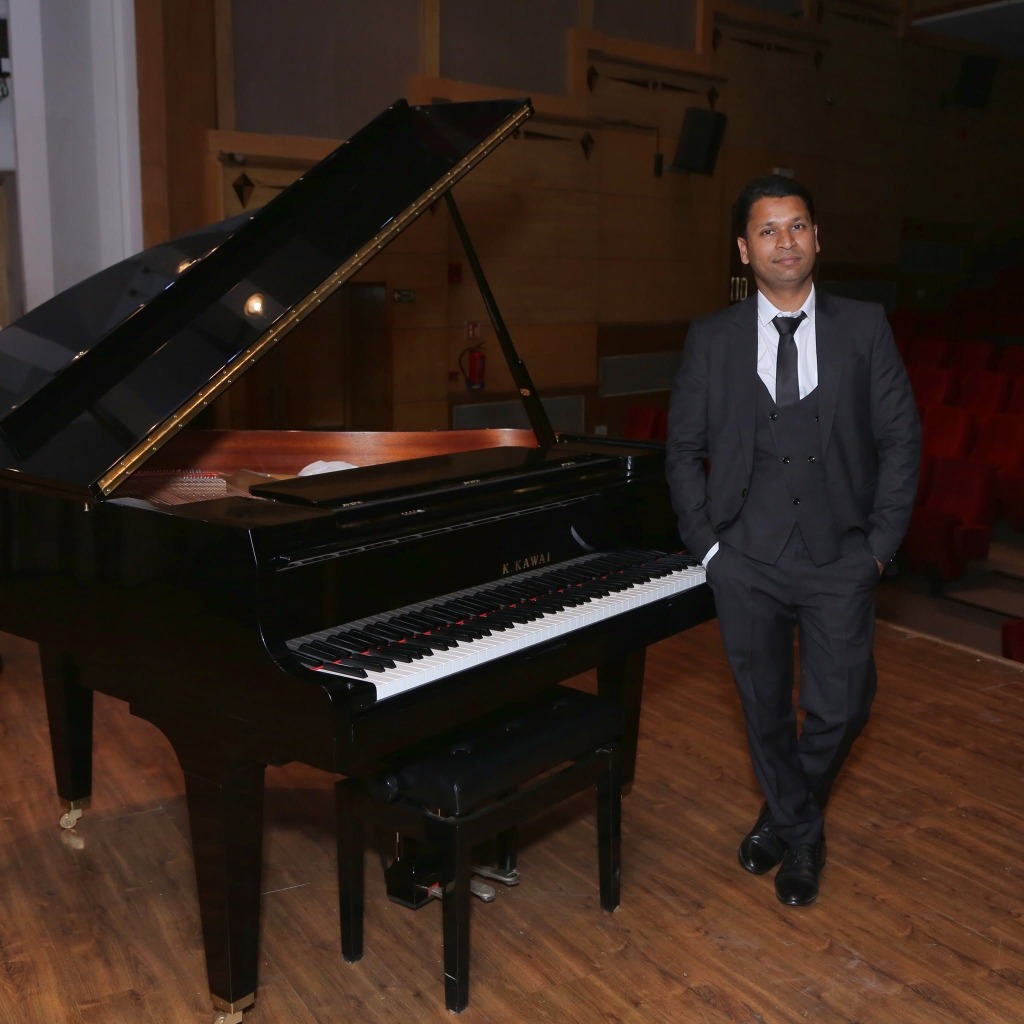
The Definitive Examination Crossroads for Indian Pianists
Navigating the Two Titans of Western Classical Music Certification
When an Indian parent commits to providing their child with a serious Western classical piano education, one of the earliest and most consequential decisions involves choosing an international examination board. In India, two venerable British institutions dominate the landscape: Trinity College London (TCL), founded in 1872, and the Associated Board of the Royal Schools of Music (ABRSM), established in 1889.
Both boards are internationally prestigious, regulated by the Office of Qualifications and Examinations Regulation (Ofqual) in the United Kingdom, and recognized by universities across the globe. However, their pedagogical philosophies, syllabus structures, supporting test requirements, and marking rubrics differ in fundamental ways.
Choosing the right exam board is not merely an administrative detail; it profoundly influences how your child develops as a musician, their day-to-day practice psychology, and their ultimate competitive standing when applying to international universities. With twenty-five years of master pedagogy and an unbroken 100% distinction record with Trinity College London, Syed Sajjad Rasul provides this definitive guide to help parents make an informed, strategic choice.
Deep Structural Comparison: Trinity vs. ABRSM
Examining Syllabus Architecture, Supporting Tests, and Mark Allocations
To understand which board best serves your child's musical journey, one must examine their syllabus architecture. While both boards divide classical study into nine sequential milestones—from Initial/Prep to Grade 8—their assessment philosophies diverge sharply.
1. Repertoire Selection and Musical Breadth: • Trinity College London: Candidates perform three pieces (each carrying twenty-two marks, totaling sixty-six marks out of 100). Trinity's repertoire lists are famously diverse, embracing Baroque, Classical, Romantic, 20th-century, and modern cinematic idioms. Trinity also allows own-choice pieces and original student compositions under specific guidelines, fostering genuine artistic agency. • ABRSM: Candidates perform three pieces chosen from three designated lists: List A (Baroque/Classical), List B (Romantic/Expressive), and List C (Contemporary/Characterful), each worth thirty marks (ninety marks out of 150 total). ABRSM adheres to a more strictly traditional European canon.
2. Technical Work vs. Supporting Tests: • Trinity Technical Work (14 Marks): Candidates can choose between traditional Scales & Arpeggios or specially composed Technical Exercises that target specific mechanical challenges (e.g., wrist rotation, finger independence, chord voicing). • Trinity Supporting Tests (20 Marks Total): Trinity allows candidates from Initial to Grade 5 to select two supporting tests from four options: Sight Reading, Aural Tests, Improvisation, or Musical Knowledge. In Grades 6 to 8, Sight Reading becomes compulsory, and the candidate chooses between Aural and Improvisation. • ABRSM Mandatory Framework: ABRSM mandates Scales & Arpeggios (twenty-one marks), Sight-Reading (twenty-one marks), and Aural Tests (eighteen marks) for every candidate at every grade, offering zero optionality.
Side-by-Side Evaluation Matrix: Trinity College London vs. ABRSM
The Complete Comparative Benchmark for Indian Families
This matrix reveals the core philosophical divergence: Trinity places greater weight on communicative performance and artistic empowerment, while ABRSM maintains a rigid, uniform testing battery.
| Feature / Dimension | Trinity College London (TCL) | Associated Board of the Royal Schools of Music (ABRSM) |
|---|---|---|
| Year Established | 1872 (London, UK) | 1889 (London, UK) |
| Marking Scale | Total 100 Marks (Pass: 60, Merit: 75, Distinction: 87) | Total 150 Marks (Pass: 100, Merit: 120, Distinction: 130) |
| Repertoire Weighting | 66% of total marks (3 pieces @ 22 marks each) | 60% of total marks (3 pieces @ 30 marks each) |
| Technical Work Options | Choice between Scales/Arpeggios OR Technical Exercises | Compulsory Scales, Arpeggios & Broken Chords |
| Supporting Test Flexibility | Candidate chooses 2 out of 4 options (Grades 1–5) | Strictly compulsory: Sight-Reading AND Aural Tests for all |
| Improvisation Option | Yes, fully accredited improvisation test option | No improvisation option in standard graded exams |
| Digital Exam Pathway | Performance Diplomas & Graded Video Exams available | Performance Grades (video-only) separate from practical |
| India Operational Network | Extensive physical presence across all Indian metros | Active presence in major metros with seasonal tours |
| UCAS Points (Grade 6–8) | Yes, fully accredited by Ofqual & UCAS | Yes, fully accredited by Ofqual & UCAS |
| Pedagogical Philosophy | Communicative artistry, musicality & student empowerment | Academic orthodoxy, comprehensive uniform testing |
Marking Rubrics & The Anatomy of a Distinction
Why Scoring 87+ on Trinity Demands Exceptional Musical Maturity
A widespread misconception among novice music teachers is that Trinity's flexibility makes it 'easier' than ABRSM. In reality, international examiners from Trinity apply an exceptionally high artistic bar to award a Distinction (87+ out of 100).
In Trinity examinations, pieces are evaluated across three distinct parameters: 1. Fluency & Technical Accuracy (7 Marks): Note accuracy, rhythmic stability, tempo integrity, and dynamic articulation. 2. Tone Quality & Touch (7 Marks): Beauty of acoustic sound, cantabile voicing, dynamic shading, and refined pedaling. 3. Performance Interpretation & Communication (8 Marks): Stylistic historical understanding, expressive phrasing, structural architecture, and stage poise.
Notice that eight out of twenty-two marks per piece are awarded solely for interpretation and musical communication. A robotic, mechanically correct performance may earn a pass or merit, but it will never secure a distinction. Syed Sajjad Rasul's mentorship focuses intensely on this communicative dimension, training students to convey the emotional narrative of every measure.
Digital Video Submissions vs. Live Face-to-Face Examinations
Navigating the Post-Pandemic Examination Landscape in Delhi NCR
Both Trinity and ABRSM now offer digital examination pathways alongside traditional face-to-face sessions in Delhi. However, their digital frameworks differ significantly:
- ▸Trinity Digital Graded Exams: Candidates record an unbroken video performance of their three pieces and complete technical work. Examiners assess the performance remotely using the exact same rigorous global standards. This format provides extraordinary convenience for busy students, eliminating exam-day scheduling conflicts while allowing high-fidelity acoustic recording in the student’s home or teacher’s studio.
- ▸ABRSM Performance Grades: ABRSM introduced a video-only 'Performance Grade' consisting of four pieces and no technical work or supporting tests, entirely separate from their traditional 'Practical Grade'.
Syed Sajjad Rasul prepares students for both digital and in-person formats, ensuring optimal microphone placement, acoustic calibration, and camera framing to showcase finger articulation and posture to international examiners.
International University Admissions: UCAS Points & Ivy League Impact
Equal Standing on the Global Academic Stage
Parents often ask whether Western universities favor ABRSM over Trinity. The definitive answer is: they are treated with identical academic standing.
Both examination boards are regulated by Ofqual at Level 3 of the UK Regulated Qualifications Framework (RQF) for Grades 6, 7, and 8. In the United Kingdom, both Trinity and ABRSM Grade 8 Distinctions confer the exact same maximum of thirty UCAS tariff points, providing valuable credit toward university entry.
For Ivy League and elite American universities (such as Harvard, Stanford, and Columbia), admissions committees do not prefer one British board over the other. What impresses admissions officers is the Grade 8 Distinction credential itself, accompanied by a compelling arts supplement video and a detailed recommendation letter from a master pedagogue.
Expert Consultation: Determining Your Child's Examination Pathway
Consult with Master Pedagogue Syed Sajjad Rasul
Deciding between Trinity College London and ABRSM requires an honest, professional appraisal of your child’s cognitive strengths, kinesthetic profile, and musical inclinations. A student with profound interpretive depth and expressive flair will flourish under Trinity’s communicative architecture, while a student who thrives on rigid uniformity may align well with ABRSM.
Syed Sajjad Rasul conducts comprehensive diagnostic evaluations to help parents select and execute the ideal examination strategy. With an unbroken 100% distinction record spanning over two decades, his studio provides the definitive roadmap to international classical music certification.
Connect via WhatsApp or phone to book a private examination diagnostic session.
The 2024–2027 Syllabus Evolution: Trinity's Modern Assessment Philosophy
Empowering Student Artistry Through Repertoire Diversity and Choice
In recent years, Trinity College London has completely modernized its examination syllabus, introducing a degree of artistic flexibility that has set a new global standard for music assessment.
Key innovations in the current Trinity Piano Syllabus include: • Expansive Repertoire Lists: Each grade features an extensive list of works spanning Baroque masterpieces, Classical sonatas, Romantic lyricism, and cutting-edge 20th-century and contemporary compositions. Trinity also allows candidates to perform one 'Own-Choice' piece or an original student composition, encouraging young pianists to explore their personal musical voice. • Technical Exercises Alternative: Instead of forcing students through dozens of dry, identical scale variations, Trinity offers carefully composed Technical Exercises that address specific musical challenges—such as tone balance between hands, rhythmic syncopation, and expressive pedaling—in a musical, engaging format. • Supporting Test Optionality (Grades 1 to 5): Recognizing that every student possesses unique cognitive strengths, Trinity allows candidates to choose two supporting tests from Sight Reading, Aural, Improvisation, or Musical Knowledge. This empowers students to demonstrate excellence in their areas of greatest strength while continuing to develop holistic musicianship.
The Practical Examination Room Experience in Delhi NCR Centers
What Actually Happens During Face-to-Face Trinity and ABRSM Examinations
Understanding the physical reality of the examination room is critical for alleviating student anxiety. In Delhi NCR, Trinity examinations are conducted at designated examination centers (such as cultural auditoriums and acoustic studios).
During a live Trinity examination: • The Welcome and Tuning In: The examiner greets the student warmly, creating a calm, supportive atmosphere designed to help the candidate perform at their absolute best. • Candidate-Led Program Order: Trinity allows the candidate to choose the order of their performance. A student who feels confident opening with technical exercises can warm up their fingers before tackling their most demanding piece. • The Examiner's Focus on Musicality: Trinity examiners are trained to listen for communicative phrasing, dynamic contrast, and emotional engagement. They do not penalize a momentary slip if the overall musical narrative and rhythmic pulse remain intact.
Strategic Decision Framework: Which Board Fits Your Goals?
A Tailored Recommendation from Master Syed Sajjad Rasul
For families weighing Trinity against ABRSM, Master Sajjad provides clear guidance: • Choose Trinity College London if you desire an educational pathway that celebrates musical expression, offers flexible repertoire spanning classical to cinematic styles, and awards top-tier UCAS points with an empowering supporting test structure. • Both boards enjoy identical worldwide prestige; what matters most to admissions committees and conservatories is the mark achieved. Under Master Sajjad's mentorship, students consistently achieve 87+ Distinctions with Trinity College London.